Complexed copper and nickel
Electroless copper, surface-treatment and related segregated streams. Review total Cu/Ni, COD or TOC, reagent use, dry solids and continuous stability.
INDUSTRIAL WATER TREATMENT
Nano-Fe heterogeneous complexation for selected PCB, rare-earth and electronic copper-foil wastewater streams, from sample screening to bypass pilot and engineering coordination.
PRIORITY STREAMS
High-value metals should be recovered first. The platform is assessed for complexed or residual streams where polishing, stability or reuse risk remains.
Electroless copper, surface-treatment and related segregated streams. Review total Cu/Ni, COD or TOC, reagent use, dry solids and continuous stability.
Assess high-salt competition, fluoride, phosphorus, residual metals and rare-earth constituents after recovery steps.
Focus on residual metals, turbidity or SDI, membrane impact, cleaning frequency and the treatment-cost basis.
TECHNOLOGY
Active iron oxyhydroxide surfaces support heterogeneous complexation, adsorption and co-precipitation. Conditions must be confirmed against representative water.
Map water source, speciation, coexisting ions and the current process.
Test capture, controlled oxidation where relevant, and solid-liquid separation.
Run a matched bypass comparison and optimise operating parameters.
Confirm the design envelope, acceptance basis and implementation boundary.
MODULE ARCHITECTURE
This functional diagram shows the review sequence, not the final project arrangement. Module size, materials and interfaces are confirmed against the design envelope.
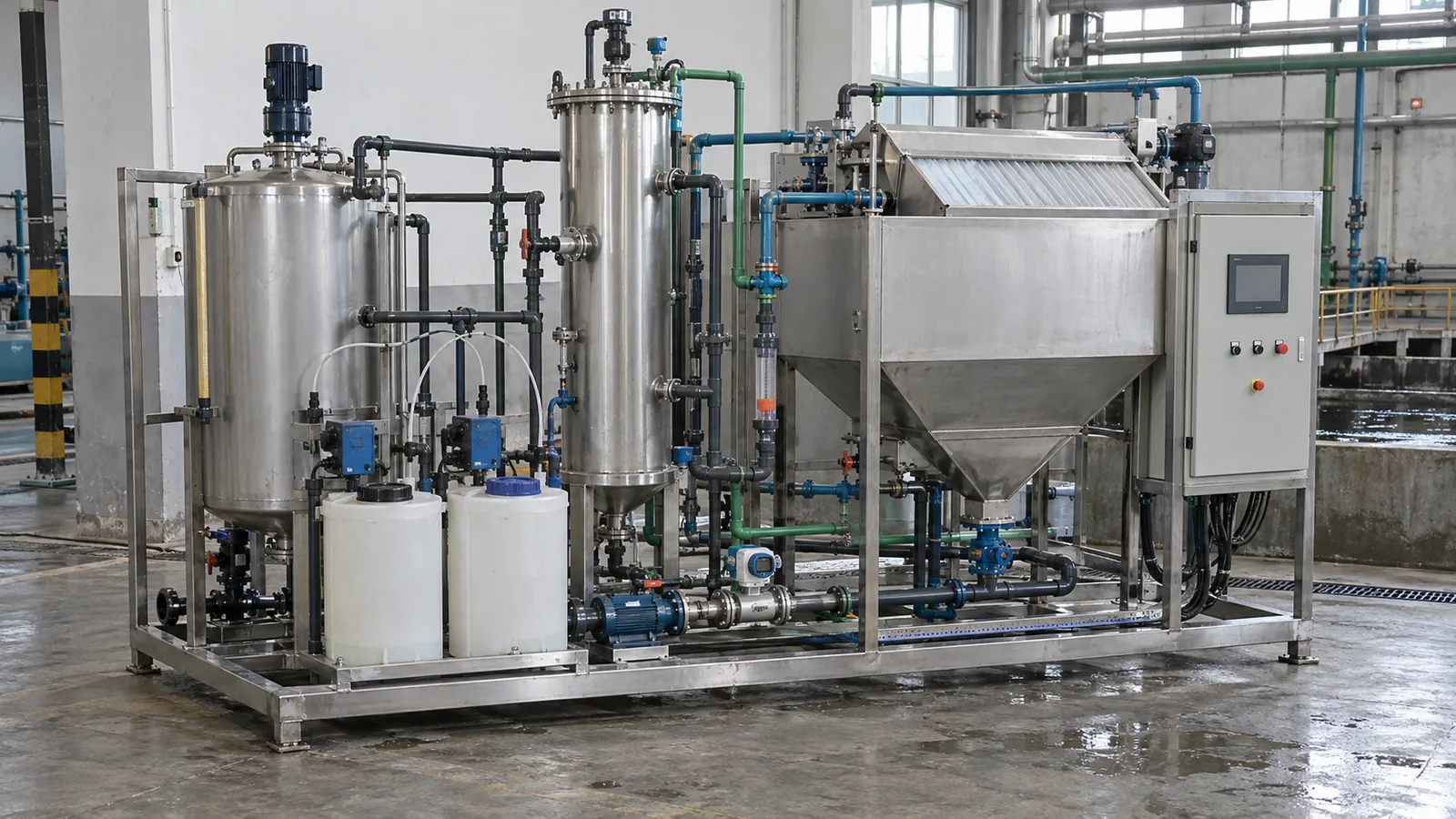
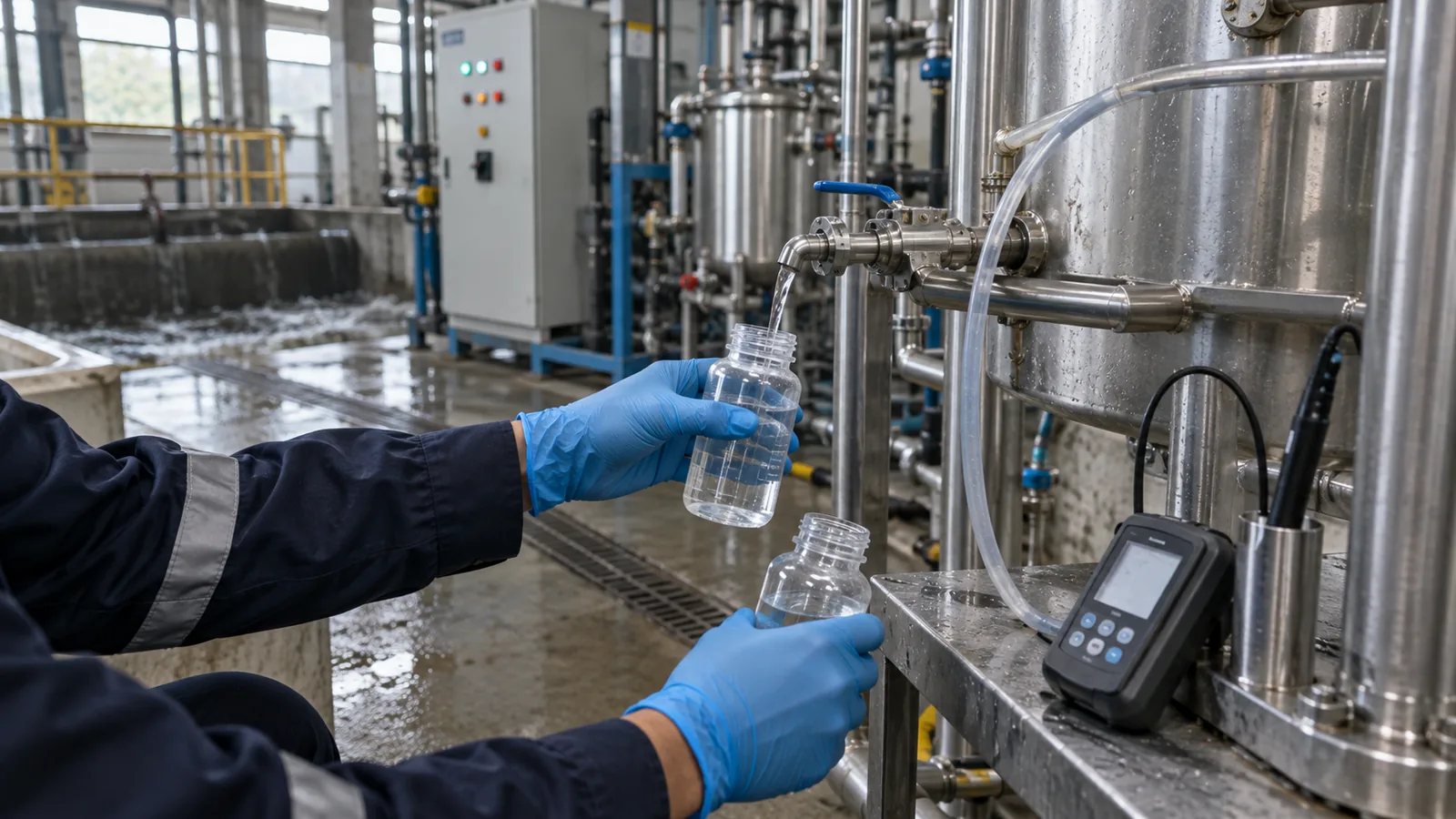
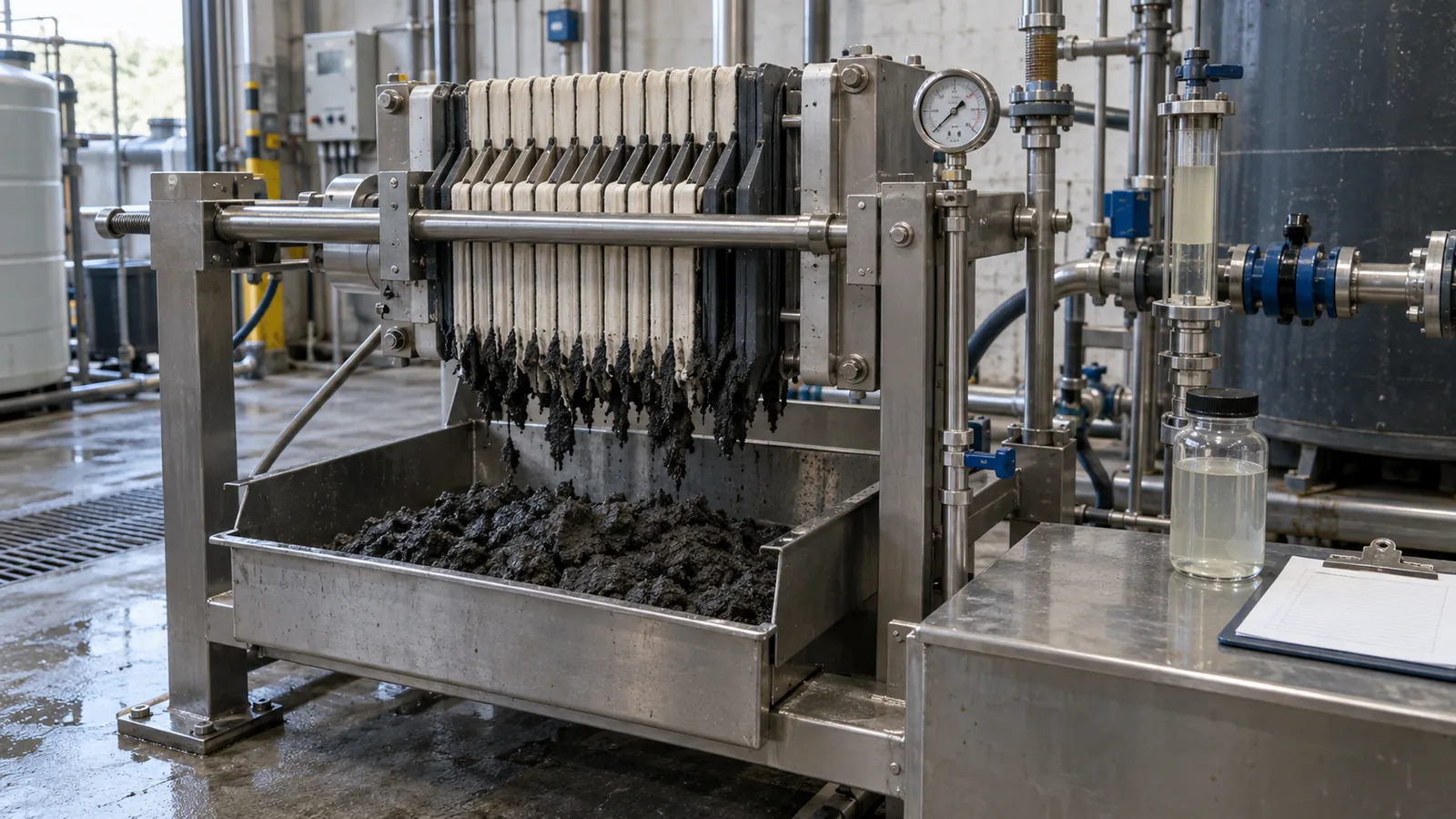
EQUIPMENT CONCEPT VISUALS
These AI-generated visuals explain the intended module, sampling and solids-handling context. They are not photographs of a Junxin customer site, a fabricated final design or proof of performance.
7 + 30 + 90
Indicative stages only. Timing depends on sample availability, site conditions and the continuous-run plan.
Water analysis, bench screening, initial reagents and a pilot recommendation.
Matched influent comparison, stability, reagents, energy, solids and reuse impact.
Operating variability, start-stop events, design envelope and commercial handover basis.
No fixed removal result, cost reduction or payback period is claimed without a representative-water test and agreed operating conditions. Cyanide-bearing, radioactive or other specialised streams require separate assessment and qualified implementation.
NEXT STEP
Organise water-quality data, the current process, cost baseline and site conditions before the first technical review.